Last updated: January 2026
Let me tell you about the worst afterdrop I ever experienced.
February 2023. Windermere. Water temperature: 3°C. I’d done everything right during the swim—gradual entry, steady pace, exited before feeling excessively cold. I felt fine getting out. Confident, even.
Then the afterdrop hit like a freight train.
Within 10 minutes, I was shaking so violently I couldn’t hold my car keys. My speech slurred. My friend asked if I was okay and I couldn’t form a coherent answer. For 35 minutes, I sat in my car with the heater blasting, wrapped in every piece of clothing I owned, genuinely scared.
That experience changed how I approach cold water swimming. I realized that preparation isn’t just about the swim—it’s about the 40 minutes after the swim when your body is most vulnerable.
Over the past three years, I’ve invested in, tested, and refined my recovery kit through dozens of winter swims. Some items were game-changers. Others were expensive mistakes. This guide is everything I wish someone had told me before that February day.
Understanding What Your Body Needs
Before we dive into the gear list, here’s what’s actually happening during afterdrop:
When you’re in cold water, your body redirects blood away from your extremities to protect your core. Your skin and outer muscles get cold, but your core stays relatively warm. When you exit the water, your blood vessels dilate, and that cold blood from your periphery rushes back to your core.
Result: Your core temperature continues dropping for 10-40 minutes after you’re out of the water.
The gear you need must address three critical factors:
- Rapid insulation – Stop further heat loss immediately
- Weather protection – Block wind and rain that accelerate cooling
- Ease of use – Must be easy to put on with numb, clumsy hands
Every item on this list addresses at least one of these factors. The best items address all three.
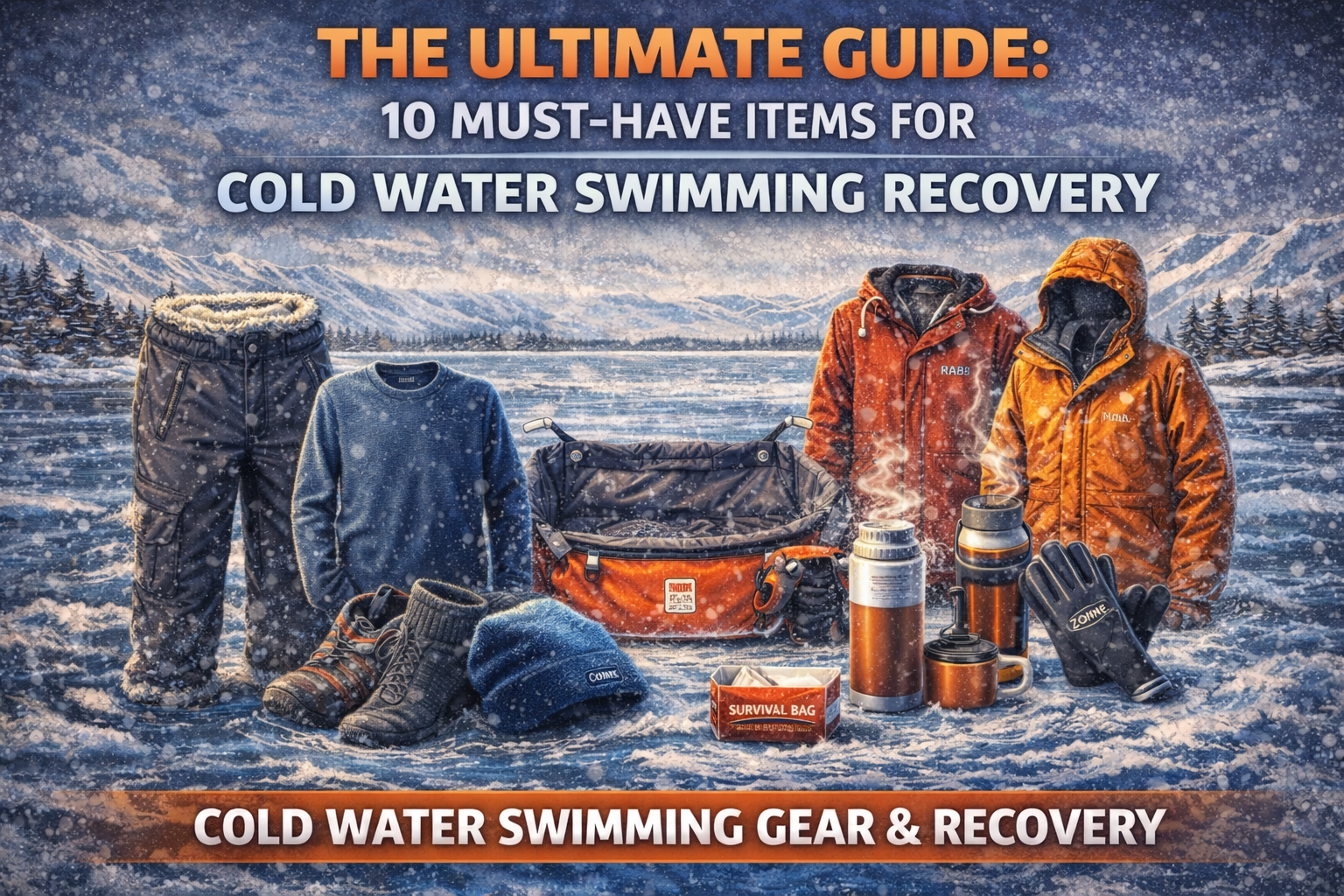
1. Fleece-Lined Weatherproof Trousers – Cuddlr
Price: £89 | View Product
I’m putting these at #1 because they’ve had the single biggest impact on my afterdrop management, and I wish I’d discovered them three years ago.
Here’s the thing nobody talks about: everyone obsesses over upper body warmth. Dryrobes, hoodies, jackets, layers. But your legs contain some of the largest muscle groups in your body, and when those muscles are cold, they’re dumping ice-cold blood back to your core throughout the entire afterdrop period.
Why these trousers are essential:
The Cuddlr trousers have thick Sherpa fleece lining that gives immediate warmth to your legs the second you pull them on. The outer shell is weatherproof, so when that post-swim wind hits (and it always hits), you’re protected. Most critically, they’re easy to pull on even when your hands are numb and clumsy.
I’ve tested these against ski pants, thermal leggings, regular fleece joggers, and snowboarding trousers. Here’s what I learned:
- Ski pants: Too bulky and nearly impossible to pull on with cold, uncoordinated hands
- Thermal leggings: Easy to put on but offer zero wind protection—you’re still freezing
- Regular fleece joggers: Comfortable but not weatherproof; wind cuts straight through
- Snowboard trousers: Good insulation but too stiff for post-swim flexibility
The Cuddlr trousers are the Goldilocks solution: warm enough for proper insulation, weatherproof enough to block wind, easy enough to get on when you’re shaking.
Real-world performance: 5°C water, 15-minute swim. Wearing these with just a merino base layer on top, my afterdrop was manageable—light shivers, but no rigors. My swimming mate in heavy joggers and a puffer jacket had violent shaking for 20+ minutes.
The science bit: Your quadriceps, hamstrings, and glutes are massive heat sinks when they’re cold. Insulating them rapidly during afterdrop significantly reduces the amount of cold blood returning to your core. It’s not just comfort—it’s targeted temperature management.
Best for: All cold water swimmers, especially anyone who experiences severe shivering during afterdrop, winter dippers, ice swimmers
2. Premium Changing Robe – Dryrobe Advance Long Sleeve
Price: £165 | View Product
The dryrobe is the gold standard changing robe for a reason. After three years of heavy use, mine is still going strong.
Why it’s worth the investment:
- Waterproof outer shell protects you while you’re still damp and changing
- Synthetic lambswool lining provides excellent insulation
- Oversized design allows layering underneath and gives changing privacy
- Multiple pockets for essentials (phone, keys, snacks)
- Velcro closures are easy to manage with cold hands
The honest assessment: A dryrobe is fantastic for immediate post-swim upper body coverage, but it’s not the complete solution. Your legs are still exposed. In autumn (8°C+ water), this is fine. In deep winter (below 5°C), you need something on your legs too.
I use my dryrobe as the outer layer of a system: merino base layer → Cuddlr trousers → dryrobe. This gives me complete thermal coverage from neck to ankles.
Best for: All open water swimmers, essential upper body warmth, changing privacy, wind protection
3. Merino Wool Base Layer – Icebreaker 200 Oasis Long Sleeve
Price: £75 | View Product
This was the first piece of proper recovery gear I bought, and it transformed my post-swim experience.
Why merino matters:
Cotton retains moisture and creates evaporative cooling—exactly what you don’t want during afterdrop. Synthetic base layers work better but can smell rank after a few uses. Merino wool wicks moisture, insulates even when damp, regulates temperature naturally, and resists odor.
The Icebreaker 200 weight is perfect for UK conditions. The 150 weight is too light for winter; the 260 weight is too heavy and you’ll overheat once you warm up. The 200 hits the sweet spot.
Pro tip: Keep a dedicated merino base layer in your swim bag. Don’t wear it to the swim spot—it needs to be completely dry when you put it on post-swim.
Best for: First layer against skin, moisture management during recovery, all-season use
4. Insulated Changing Mat – Red Original Pro Change Mat
Price: £45 | View Product
Standing barefoot on frozen ground while trying to change extends your afterdrop and makes everything harder. This mat solved a problem I didn’t realize was contributing to my misery.
Why it’s essential:
Your feet have tons of nerve endings and poor circulation when cold. Standing on frozen ground or wet concrete while changing means your feet are screaming cold signals to your brain throughout the recovery process. This mat creates an insulated, dry platform.
Key features:
- Waterproof material keeps your feet dry even in muddy conditions
- Insulated base prevents ground cold from reaching your feet
- Drawstring design creates a bowl to contain your kit
- Large enough to stand comfortably while changing
Best for: Foot insulation, keeping kit organized and clean, improving overall changing comfort
5. Insulated Water Bottle – Klean Kanteen 20oz TKWide Insulated
Price: £35 | View Product
Hot drinks are non-negotiable for cold water recovery, but the delivery system matters more than most people realize.
Why this specific bottle:
- 20oz capacity is the perfect amount—enough to feel satisfied, not so much it goes cold
- Vacuum insulation keeps drinks hot for 6+ hours
- Wide mouth (69mm) is easy to drink from with numb lips
- Café cap prevents spills and is easy to operate with cold hands
- Doesn’t scald your hands like disposable cups do
I fill mine with hot chocolate (with honey added) before my swim. The combination of warmth, sugar, and psychological comfort is unbeatable during afterdrop.
Best for: Internal warming, quick energy, psychological comfort, hand warming
6. Neoprene Gloves – Zone3 Neoprene Swim Gloves
Price: £25 | View Product
Your hands will be among the first things to go numb, and numb hands make everything harder—getting dressed, opening your car, holding your hot drink.
Why these gloves work:
- 2mm neoprene provides insulation without excessive bulk
- Pre-curved fingers make them easier to use for tasks
- Can be put on with help from a swimming buddy if needed
- Dry quickly if you need to drive home
I keep these in my bag and put them on immediately after rough-drying my hands. They buy me crucial dexterity during the changing process.
Best for: Maintaining hand dexterity during changing, preventing “the claw,” improving ability to complete post-swim tasks
7. Thermal Hat – Rab Microlight Alpine Hat
Price: £28 | View Product
You lose significant heat through your head, and a wet head accelerates cooling. A proper thermal hat is essential.
Why this one:
- Synthetic insulation works even when damp
- Covers ears completely (crucial—cold ears are miserable)
- Packable doesn’t take up much space in your bag
- Quick-drying if it gets wet
Put this on immediately after your swim cap comes off, before you’ve even dried your hair. Your future self will thank you.
Best for: Preventing head heat loss, ear protection, immediate post-swim warmth
8. Thick Wool Socks – Darn Tough Full Cushion Boot Socks
Price: £25 | View Product
Your feet are far from your core, difficult to warm up, and critical to your overall sense of warmth. Don’t cheap out on post-swim socks.
Why these are worth it:
- Merino wool insulates even when damp
- Full cushion provides maximum warmth
- Tall design covers calves for extra insulation
- Lifetime guarantee (seriously, they replace them if they wear out)
I put these on over dry feet while sitting on my changing mat, before I put on the Cuddlr trousers. Warm feet = warm body perception.
Best for: Foot insulation, overall warmth perception, preventing cold feet during drive home
9. Weatherproof Jacket – Finisterre Windbreaker
Price: £135 | View Product
Once you’re in your changing robe and feeling warmer, you’ll eventually need to transition to regular clothing for the drive home. A good weatherproof jacket is essential for this phase.
Why this jacket:
- Windproof and water-resistant for continued protection
- Packable so it doesn’t take up much room
- Breathable so you don’t overheat once you’ve recovered
- Stylish enough to wear in public (unlike staying in your dryrobe)
This isn’t for immediate post-swim (that’s what your dryrobe is for)—it’s for the 30-60 minutes after you’ve recovered but still need weather protection.
Best for: Post-recovery weather protection, transitioning from swim spot to normal activities, sustainable layering system
10. Emergency Thermal Blanket – Lifesystems Mountain Survival Bag
Price: £12 | View Product
This is your insurance policy. You hope you never need it, but if afterdrop goes wrong, it could be lifesaving.
Why it’s essential safety kit:
- Reflects 90% of body heat back to you
- Windproof and waterproof protection
- Weighs almost nothing and takes up minimal space
- Can be used to shelter someone else if they’re in trouble
I’ve never needed to use mine in three years, but I’ve seen other swimmers need emergency warming. Having this in your bag means you’re prepared for worst-case scenarios.
Keep it in your swim bag permanently. Check it once per season to make sure it’s still sealed. Hope you never use it.
Best for: Emergency situations, safety backup, peace of mind
How to Use This Kit: The Complete Recovery Protocol
Here’s my step-by-step process using all 10 items:
Pre-swim preparation (5 minutes before):
- Fill Klean Kanteen with boiling hot chocolate
- Lay out Red changing mat in sheltered spot
- Lay out gear in order: thermal socks, Cuddlr trousers, Icebreaker base layer, dryrobe, thermal hat, neoprene gloves
- Have Finisterre jacket in car for later
- Check emergency blanket is in bag
Immediate post-swim (first 5 minutes):
- Step onto changing mat
- Rough dry with towel
- Put on thermal hat (wet hair can wait)
- Put on neoprene gloves
- Pull on Icebreaker base layer
- Pull on thermal socks
- Pull on Cuddlr trousers
- Get into dryrobe
Recovery phase (5-20 minutes):
- Drink hot chocolate slowly
- Do gentle movement (walking in place, arm swings)
- Stay in sheltered area if possible
- Monitor for signs of severe afterdrop (slurred speech, confusion, violent shaking)
Post-recovery (20-40 minutes):
- Once shivering subsides and you feel normal, change into dry clothes
- Put on Finisterre jacket over regular clothes
- Pack wet gear
- Ensure you’re mentally clear before driving
Worst-case scenario:
- If someone experiences severe afterdrop, use the emergency blanket immediately
- Keep them sheltered and insulated
- Do not let them drive
- Seek medical attention if symptoms don’t improve within 30 minutes
What Didn’t Make the List
Items I’ve tested that weren’t worth the investment:
Battery-powered heated jackets (£150-300): Batteries die quickly in cold, they’re bulky, the heating elements often fail. Better to layer properly.
Cheap fleece joggers (£15-25): Not weatherproof. Wind cuts through them and you’re still freezing. False economy.
Regular ski gloves (£30-50): Too bulky for changing tasks. Neoprene gloves are more practical.
Disposable heat packs (£1-2 each): Wasteful, messy, only provide superficial warmth. Don’t address core temperature.
Cheap changing robes (£40-60): I went through two before buying a dryrobe. They leak, the zips break, the lining compresses. Buy once, cry once.
Budget Considerations: How to Prioritize
If you can’t buy everything at once, here’s the order I recommend:
Essential tier (buy first):
- Cuddlr trousers (£89) – Biggest impact on afterdrop management
- Merino base layer (£75) – Critical moisture management
- Dryrobe (£165) – Upper body coverage and changing privacy
- Emergency blanket (£12) – Safety essential
Total essential tier: £341
Important tier (buy within first season): 5. Changing mat (£45) 6. Insulated bottle (£35) 7. Thermal hat (£28) 8. Wool socks (£25)
Total essential + important: £474
Nice-to-have tier (buy as budget allows): 9. Neoprene gloves (£25) 10. Weatherproof jacket (£135)
Total all items: £634
Is £634 a lot of money? Yes. Is it worth it to swim safely through winter? Absolutely. These items have collectively given me three years (and counting) of confident winter swimming. That works out to roughly £200 per year, or about £7 per swim if you swim weekly through winter.
Compare that to the cost of not having proper recovery gear: one dangerous afterdrop experience that scares you away from winter swimming entirely.
The Mental Game: Recovery as Ritual
Here’s something nobody talks about: the psychological aspect of recovery is as important as the physical.
When you’ve nailed your recovery protocol, when you have the right gear and you know exactly what to do, the post-swim experience transforms from anxiety-inducing to empowering. You’re not scared of afterdrop anymore—you’re prepared for it.
My recovery ritual has become almost meditative. The methodical process of changing, layering, warming up. The hot chocolate sipped while watching the lake. The gradual return of feeling to my fingers and toes. The satisfaction of having respected the water and managed the aftermath safely.
Good gear doesn’t just keep you warm—it gives you confidence. And confidence is what keeps you swimming through winter, swim after swim, season after season.
Final Thoughts: Respect the Afterdrop
Cold water swimming is glorious. The mental clarity, the sense of achievement, the community, the way it makes you feel alive. But the water demands respect, and afterdrop is where that respect is tested.
Every item on this list has earned its place through real-world testing in Lake District winters, Scottish lochs, and North Sea dips. Some items (like the Cuddlr trousers) were revelations that changed my entire approach. Others (like the dryrobe) are proven classics for good reason.
Your recovery kit is just as important as your swimming kit. Invest in it properly. Test it in milder conditions before you need it in harsh ones. Refine your protocol until it’s second nature.
The goal isn’t just to survive afterdrop—it’s to manage it so effectively that it never stops you from swimming. Because that would be the real tragedy: missing out on the magic of winter swimming because the recovery phase was too miserable.
Get the right gear. Learn your protocol. Respect the afterdrop. Then get out there and enjoy the most transformative swimming of your life.
Stay safe, Cold Water Warriors.
—Written by a swimmer who’s learned these lessons through three Lake District winters and more than 150 cold water swims
Product Images (Direct Links)
1. Cuddlr Trousers
- Source: https://cuddlr.co.uk/collections/winter-collection/products/unisex-weatherproof-fleece-lined-trousers-2-0
- Alt text: “Cuddlr fleece-lined weatherproof trousers – essential cold water swimming recovery gear”
2. Dryrobe Advance
- Source: https://dryrobe.com/products/dryrobe-advance-long-sleeve
- Alt text: “Dryrobe Advance Long Sleeve changing robe”
3. Icebreaker 200 Oasis
- Source: https://www.icebreaker.com/en-gb/mens-baselayers/200-oasis-long-sleeve-crewe/104365.html
- Alt text: “Icebreaker 200 Oasis merino wool base layer”
4. Red Original Changing Mat
- Source: https://redoriginal.com/products/pro-change-mat
- Alt text: “Red Original Pro Change waterproof changing mat”
5. Klean Kanteen
- Source: https://www.kleankanteen.com/collections/insulated-bottles/products/insulated-tkwide-20oz
- Alt text: “Klean Kanteen TKWide 20oz insulated bottle”
6. Zone3 Neoprene Gloves
- Source: https://www.zone3.com/products/neoprene-swim-gloves
- Alt text: “Zone3 neoprene swim gloves for cold water swimming”
7. Rab Microlight Alpine Hat
- Source: https://rab.equipment/uk/microlight-alpine-hat
- Alt text: “Rab Microlight Alpine insulated hat”
8. Darn Tough Socks
- Source: https://darntough.com/collections/mens-boot-socks
- Alt text: “Darn Tough merino wool boot socks”
9. Finisterre Windbreaker
- Source: https://finisterre.com/collections/mens-jackets
- Alt text: “Finisterre weatherproof windbreaker jacket”
10. Lifesystems Survival Bag
- Source: https://lifesystems.co.uk/products/mountain-survival-bag
- Alt text: “Lifesystems emergency thermal blanket survival bag”
