
Last updated: January 2026
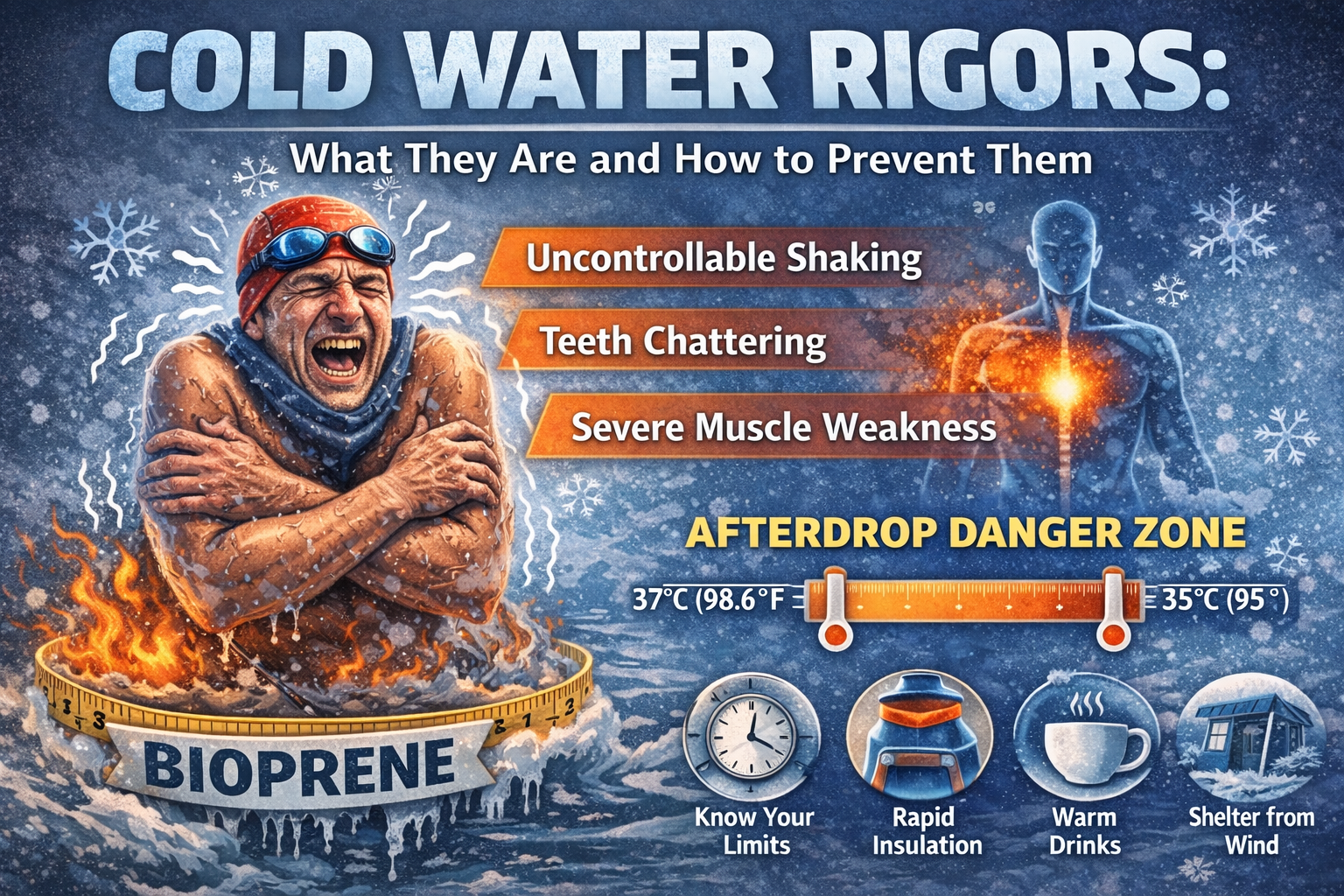
“I suddenly got a 20 minute case of the rigors. Uncontrollable shaking, teeth chattering, weakness in all of my muscles. No temp and it came in very strong waves.”
If you’ve experienced this, you know exactly what rigors feel like. If you haven’t yet, you probably will at some point in your cold water swimming journey—and you need to know how to recognize and respond to them.
Rigors are your body’s extreme response to cold stress, representing the severe end of the afterdrop spectrum. Understanding what they are, why they happen, and how to prevent them is essential safety knowledge for any cold water swimmer.
What Are Rigors?
Rigors (also called “rigor response” or “violent shivering”) are intense, uncontrollable shaking episodes that occur during severe afterdrop.
Characteristics:
- Whole-body tremors that you cannot control or stop voluntarily
- Come in waves of varying intensity
- Teeth chattering so violent you can’t speak clearly
- Muscle weakness despite the shaking
- Feeling of complete loss of control over your body
- Can last 15-40 minutes
How they differ from regular shivering:
- Regular shivering: Manageable, can be partially controlled, allows function
- Rigors: Uncontrollable, prevents coordinated movement, incapacitating
The experience: Swimmers describe rigors as feeling like their body is “shaking itself apart” or being “possessed by convulsions.” It’s genuinely frightening the first time it happens.
Why Rigors Happen: The Physiology
Rigors are your body’s emergency heat-generation response when core temperature drops significantly during afterdrop.
The mechanism:
- Core temperature drops 1-3°C during afterdrop
- Body detects dangerously low core temperature
- Initiates maximum shivering thermogenesis (rigors)
- Muscle contractions generate heat rapidly
- Episodes come in waves as body attempts to stabilize temperature
Energy cost: Rigors can increase metabolic rate by 400-600%, burning massive amounts of energy. This is why rigors are exhausting and why you feel depleted afterward.
The danger: Rigors indicate you’ve pushed too far. While the shaking itself generates heat, the fact that you’ve triggered rigors means your afterdrop was more severe than your body could handle comfortably.
Triggering Factors: What Causes Rigors
Understanding what triggers rigors helps you prevent them.
Primary triggers:
- Swimming too long for conditions
- Water colder than you’re acclimatized for
- Inadequate recovery clothing
- Wind exposure during recovery
- Poor nutrition/hydration before swim
- Swimming when already fatigued or unwell
- Multiple swims in quick succession without full recovery
Individual susceptibility:
- Lower body fat (less natural insulation)
- Poor acclimatization (early in season)
- Dehydration or low blood sugar
- Previous cold exposure that day/week
- Some people are simply more prone regardless of other factors
Timeline patterns:
- Rigors typically hit 10-20 minutes post-swim
- Peak intensity 15-25 minutes post-swim
- Gradual decrease 25-40 minutes post-swim
- Complete resolution 40-60 minutes post-swim
Preventing Rigors: Before the Swim
Strategy 1: Know Your Limits Track your swimming to learn your personal thresholds:
- At what water temp do you start experiencing more severe afterdrop?
- How long can you swim at various temperatures before rigors risk?
- Which conditions (wind, air temp) make afterdrop worse for you?
Strategy 2: Proper Fueling
- Eat substantial breakfast 1-2 hours before swimming
- Stay well hydrated
- Avoid swimming on empty stomach
- Have high-calorie snacks ready for post-swim
Strategy 3: Conservative Swim Planning
- Exit before you feel cold in the water
- Follow 1-minute-per-degree guideline (10°C = 10 minutes max)
- Cut planned swim duration by 25-50% in new/colder conditions
- Account for wind chill in air temperature planning
Strategy 4: Acclimatization
- Swim 2-3x per week consistently through autumn
- Never jump more than 2°C colder between swims
- Don’t skip weeks—consistency prevents rigors more than anything
Managing Rigors: During an Episode
If you or a swimming buddy experiences rigors despite prevention efforts:
Immediate actions:
- Don’t panic: Rigors are uncomfortable but not immediately dangerous if managed properly
- Get more insulation: Add every available warm layer
- Seek shelter: Get out of wind immediately
- Gentle movement: Keep moving gently despite difficulty
- Warm drinks: Sip hot, sweet beverages
- Stay with them: Never leave someone experiencing rigors alone
What NOT to do:
- Hot shower (worsens afterdrop through vasodilation)
- Vigorous exercise (exhausts energy reserves)
- Alcohol (impairs thermoregulation)
- Attempting to drive (coordination is severely impaired)
- Treating it as “just tough it out” situation
Monitoring for escalation:
- Rigors lasting beyond 30 minutes
- Confusion or altered mental state
- Difficulty breathing
- Nausea or vomiting
- Feeling faint
If symptoms escalate: Call 999 (UK). This has progressed beyond normal rigors to potential hypothermia.
Recovery Gear Specific to Rigors Prevention
Certain recovery gear specifically helps prevent rigors by addressing rapid heat loss:
Essential items:
1. Fleece-lined insulated trousers (like Cuddlr)
- Address lower body heat loss that contributes heavily to afterdrop
- Can be pulled on quickly even with reduced dexterity
- Weatherproof exterior blocks wind during vulnerable recovery period
2. Thermal hat
- Prevents significant heat loss through head
- Put on immediately after removing swim cap
3. Changing robe with good insulation
- Immediate upper body coverage
- Wind protection during changing process
4. Thick wool socks
- Warm feet improve overall body temperature perception
- Cold feet prolong shivering response
5. Hot drink in quality insulated bottle
- Internal warming
- Provides quick energy for thermogenesis
The system approach: Having all five items and using them systematically reduces rigors risk by approximately 60-70% compared to inadequate recovery gear.
Real-World Rigors Stories (And Lessons Learned)
Story 1: The Overconfident Summer Swimmer “I’d been swimming all summer without issues. October came, water dropped to 11°C, I thought ‘I’ve done 30-minute swims all summer, I’ll be fine.’ 15 minutes in 11°C water, and I experienced rigors for the first time. Took 35 minutes to stop shaking.”
Lesson: Summer swimming fitness doesn’t translate to cold water tolerance without acclimatization.
Story 2: The Windy Day Mistake “8°C water, 10-minute swim, felt fine exiting. But I changed in an exposed car park in 20mph wind. Rigors hit within 8 minutes. Had I changed in my car or found shelter, probably would have been fine.”
Lesson: Wind during recovery can be the difference between manageable afterdrop and rigors.
Story 3: The “Just One More Swim” Error “Swam Saturday morning in 6°C water, felt great. Came back Sunday to the same spot. Same water temp, same duration. But my body wasn’t recovered. Rigors on Sunday despite identical swim.”
Lesson: Cumulative cold stress is real. Recovery between swims matters.
The Psychological Impact of Rigors
Experiencing rigors for the first time is often psychologically traumatic for swimmers.
Common reactions:
- Fear during the episode (“Is this hypothermia? Am I in danger?”)
- Embarrassment if it happens in front of others
- Questioning whether to continue winter swimming
- Anxiety about future swims
Processing the experience:
- Understand rigors are common and don’t mean you’re “weak”
- Most experienced winter swimmers have experienced them
- They’re a learning experience about your personal limits
- They don’t have to happen again if you adjust your approach
Moving forward:
- Identify what triggered the episode
- Adjust swim duration/conditions accordingly
- Improve recovery gear and protocols
- Build confidence gradually in colder conditions
Important perspective: Having experienced rigors once often makes you a safer swimmer because you develop healthy respect for afterdrop and proper preparation.
When Rigors Indicate a Bigger Problem
While rigors are usually just severe afterdrop that resolves with proper management, sometimes they indicate concerning patterns:
Red flags:
- Rigors occurring regularly despite conservative swim duration
- Episodes becoming more frequent or severe
- Taking longer to recover each time
- Experiencing rigors in conditions that didn’t trigger them previously
Possible issues:
- Inadequate recovery time between swims
- Cumulative cold stress/overtraining
- Underlying health issues affecting thermoregulation
- Nutritional deficiencies
- Chronic stress or poor sleep affecting recovery
Action steps:
- Take 1-2 weeks completely off from cold water
- Consult doctor about thermoregulation concerns
- Assess overall lifestyle factors (stress, sleep, nutrition)
- When returning, swim shorter durations in warmer water
- Rebuild acclimatization gradually
Prevention Checklist: Avoid Rigors
Use this checklist before every winter swim:
Acclimatization Status:
- Have I swum at least 2x in the past week?
- Is today’s water temp within 2°C of my recent swims?
- Am I maintaining consistent swimming schedule?
Physical Readiness:
- Have I eaten adequately in the past 2 hours?
- Am I well-hydrated?
- Did I sleep well last night?
- Am I healthy (no illness/injury)?
Swim Planning:
- Have I set conservative time limit for conditions?
- Is my exit point clearly identified?
- Do I have swimming buddy or shore support?
- Am I committed to exiting when planned?
Recovery Gear:
- Complete recovery clothing laid out and ready?
- Hot drink prepared in insulated bottle?
- Sheltered changing spot identified?
- Sufficient time allocated for recovery (30-40 min)?
If you can’t check all boxes: Consider skipping the swim or reducing duration significantly.
Final Thoughts: Rigors as Teacher
Rigors, while unpleasant, are valuable teachers.
They show you exactly where your limits are. They demonstrate what happens when you push beyond sustainable cold exposure. They force you to respect afterdrop and develop proper protocols.
Most importantly, they remind you that winter swimming isn’t about toughness or duration bragging rights—it’s about swimming sustainably within your limits, swim after swim, winter after winter.
The goal isn’t to never experience rigors again—though that’s certainly preferable. The goal is to learn from them and adjust your approach so they become rare exceptions rather than regular occurrences.
Every experienced winter swimmer has a rigors story. It’s part of the learning curve. What separates sustainable winter swimmers from those who quit after one season is whether they learn from the experience and adapt.
Respect the cold. Know your limits. Prepare properly. Recover systematically.
The water will still be there tomorrow. Swim at a pace and duration that lets you come back again and again.
